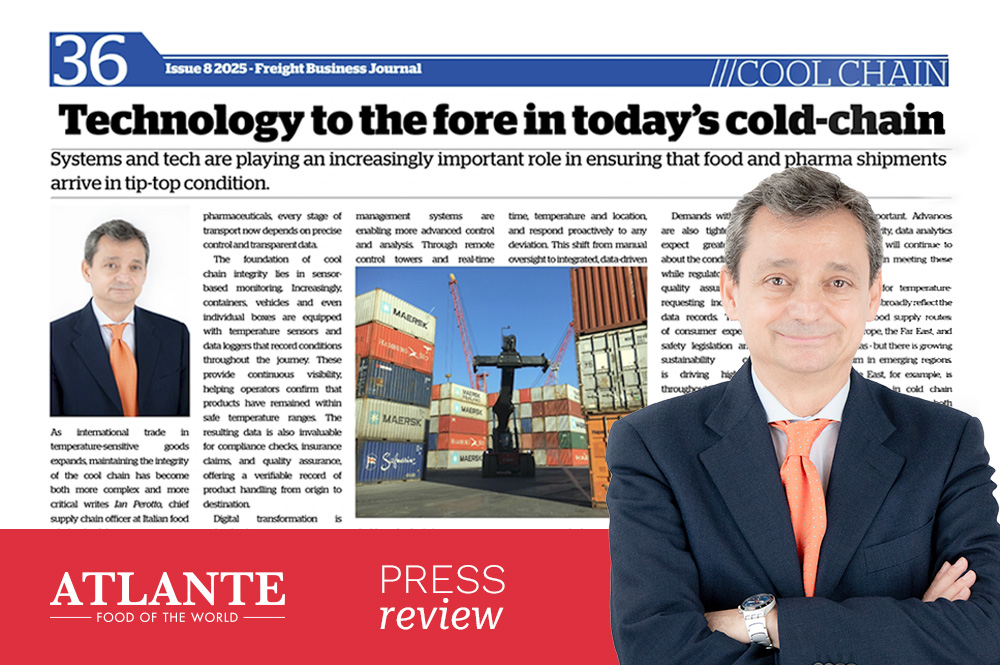
Rising Complexity in the Global Cool Chain
As international trade in temperature-sensitive goods continues to grow, maintaining the integrity of the cool chain is becoming both more complex and critical. From fresh produce and frozen foods to pharmaceuticals, every stage of transport now requires precise temperature control and transparent monitoring to safeguard product quality and meet regulatory requirements.
Technology at the Heart of Integrity
In his recent article for Freight Business Journal, Ian Perotto, Atlante’s Chief Supply Chain Officer, discusses how the foundation of cool chain reliability lies in sensor-based monitoring and real-time data tracking. Containers, vehicles, and even individual packages are increasingly equipped with temperature sensors and data loggers, providing continuous visibility throughout the journey. This technology not only ensures products remain within safe temperature ranges but also supports compliance, insurance, and quality assurance processes.
Digital Transformation and Data-Driven Management
Perotto highlights how digital tools are reshaping temperature-controlled logistics. Modern Transportation Management Systems (TMS), combined with control towers and real-time dashboards, allow logistics teams to monitor multiple parameters, including time, temperature, and location, and respond proactively to deviations. This shift from manual oversight to integrated, data-driven management improves both efficiency and accountability across the sector.
Meeting Increasing Segment Demands
Customer expectations and regulatory requirements are tightening. Shoppers want assurance about the condition of goods, while regulators and quality assurance teams demand detailed records of handling and storage. These pressures, coupled with corporate sustainability goals, are driving higher standards for visibility, reporting, and overall cool chain reliability.
Growth and Global Trade Flows
The outlook for temperature-controlled logistics remains strong. Global demand for chilled and fresh foods is rising, driven by lifestyle trends emphasizing health, nutrition, and sustainability. Trade flows continue to reflect established food supply routes between Europe, the Far East, and the Americas, while emerging regions like the Middle East are investing heavily in cold chain infrastructure to support imports and serve as regional logistics hubs.
At Atlante, we see technology not just as an enabler but as the backbone of a resilient and transparent global cool chain. By combining advanced monitoring systems, data analytics, and proactive management, we help ensure temperature-sensitive goods arrive safely, sustainably, and in perfect condition. Our focus is on building trust across supply chains while supporting the growth and complexity of international trade in perishable products.
Read the full interview with Ian Perotto in Freight Business Journal.